Thursday, 22 March 2012

The V3 Series by Acer

The V3 Series by Acer:
This is the Taiwan based computer maker Acer’s entry into the ultrabook market, but according to the specs and features, this is not really an ultrabook at all! Sure, it is slimmer than other similar Acer laptops, but that is about it for now at least.
Acer Aspire V3 Series 500x333 The V3 Series by Acer
Basically what we have here are three versions of the V3, all virtually identical apart from the size of the display, they will offer the latest processors from Intel, graphics cards by Nvidia and some serious speakers too. However, this is a new launch and the precise specifications are a little limited at the moment.
Therefore, here is what we do know, the new V3 series comes in a 14 inch, 15.6 inch and 17.3 inch, with the later coming with the Acer Cine Crystal HD+ LED backlit display with a 1600 x 900 of pixel resolutions and the Acer Crystal Eye HD web camera built in.
acer v3 new laptop range 0 The V3 Series by Acer
They are going to be powered by the latest generation of the Intel Core Sandy Bridge family processors and with video coming from the NVIDA GeForce GT Series graphic cards. These are entertainment laptops and as such come with the Dolby Home Theater v4 sound system, a Blu-ray Disc drive and the all important HDMI out for connecting to a larger screen.
When it comes to networking and connectivity there is the Acer InviLink Nplify Wi-Fi and Gigabit Ethernet, Acer clear.fi 2.0 for home networking, a multi-in-1 card slot, Bluetooth 4.0 and a choice of USB 2.0 and USB 3.0 ports with the handy USB power-off charging to choose from.
DSC 0065 large verge medium landscape The V3 Series by Acer
The outside has a nice glossy finish and the V3 series comes in a choice of colour too, such as; Midnight Black, Dawn Gold, Nightfall Gray and Thunderbolt Silver.
The V3 is expected to find its way onto the market around the summer time and will have a starting price of around $500.
Source [Pocket Lint]


Acer Aspire V3 Series 500x333 150x150 The V3 Series by Acer
DSC 0065 large verge medium landscape 150x150 The V3 Series by Acer
acer v3 new laptop range 0 150x150 The V3 Series by Acer


Copyright © 1999-2012 Geek With Laptop. The GeekWithLaptop.com RSS Feed is for personal non-commercial use only. If you are not reading this material in your news aggregator, the site you are looking at is guilty of copyright infringement. Please contact legal {at} geekwithlaptop {dot} com so we can take legal action immediately.More Information:
Source : Google Reader 

Asus launches the K73SD-TY2670 notebook

Asus launches the K73SD-TY2670 notebook:
The Taiwan based computer maker Asus have launched a new multimedia notebook in Japan, it is known simply as the K73SD-TY2670, but it promises to offer the user high level of performance for starting price of around $1,200.
Asus are skilled at bringing out machines with high specs and reasonable prices, the K73SD-TY2670 is no exception to this rule and therefore the customer will be getting some serious specifications with the computer, it may not be a gamer’s choice, but for anyone wanting to watch video this is the one.
20120309130419 105  Asus launches the K73SD TY2670 notebook
Not much is known about the K73SD-TY2670 notebook, but here is run down of what we currently have. It has a nice sized 17.3 inch WXGA++ LED back lit LCD screen with a 1600 x 900 of pixel resolution and there is room for a built in web camera too. Asus have gone for a quad core Intel Core i7 2670QM processor clocked at a 2.2 GHz but this can go up to 3.1 GHz with the help of the Turbo Boost feature.
314TlhnbINL. SL500 AA300  Asus launches the K73SD TY2670 notebook
For video and graphics, there is the Intel HM65 Express chipset and the Nvidia GeForce 610M 1 GB graphics card that comes with support for the Optimus technology. With 8 GB of DDR3 RAM there is no shortage of internal memory, while storage starts with a 500 GB hard disk drive (HDD) but the buyer could opt for another HDD to be installed doubling the storage capacity to 1 TB.
asus k73sd ty2670 Asus launches the K73SD TY2670 notebook
Connectivity offers the normal D-Sub15 pin, HDMI port, four standard USB 2.0 ports and an SD memory card reader (SDXC), networking has relies on the usual Wi-Fi and Bluetooth, while for reading data and watching video there is always the BluRay Disc Drive.
The vital statistics of the K73SD-TY2670 are 420 mm (W) × 282 mm (D) × 34.6 mm to 38.6 mm (H) and it will weigh in at 3.1 kg with the battery pack installed, which according to Asus should be good for up to five hours use in ideal conditions, whatever they are!
The K73SD-TY2670 notebook is currently on sale in Japan with a starting price of around $1,210, it is not known yet if this multimedia notebook will become available in other markets.
Source [Eee PC]


Copyright © 1999-2012 Geek With Laptop. The GeekWithLaptop.com RSS Feed is for personal non-commercial use only. If you are not reading this material in your news aggregator, the site you are looking at is guilty of copyright infringement. Please contact legal {at} geekwithlaptop {dot} com so we can take legal action immediately.More Information:

Source : Google Reader

Yet Another Samsung Galaxy S III Leak Surfaces [Picture]

Yet Another Samsung Galaxy S III Leak Surfaces [Picture]:
The Android community is excited as another Samsung Galaxy S III leak has surfaced on the internet. Leaks rarely happen in Apple’s case whenever it’s due to announce a new product. Samsung doesn’t seem to be that conspicuous, or maybe people are putting way too much effort in developing fake images. Today another purported Samsung Galaxy III image has been leaked on the internet. The device itself has been rumoured to launch in late May.
samsung galaxy s iii leak picture Yet Another Samsung Galaxy S III Leak Surfaces [Picture]
The Galaxy S III is going to be Samsung’s next flagship Android smartphone. The Galaxy line of smartphones has been a phenomenal success for Samsung ever since it launched the first ever Galaxy smartphone. The Samsung Galaxy S II has been one of the most selling smartphones in the world and has contributed much to the worldwide market share of Android devices. Die hard Android fans have a lot of expectations from Samsung’s latest upcoming smartphone and these leaks just keep complementing the anticipation.
Only a couple of days back I posted about a purported leaked press shot of the Galaxy S III. The image revealed that Samsung will announce this smartphone at the Samsung Unplugged event in London on May 22, 2012. Samsung has not commented on this alleged leak, but this one falls perfectly in line with Samsung’s previous statement that it will only release this smartphone when it is ready for retail. The Korean manufacturer had said that it won’t announce this device at Mobile World Congress 2012, rather it would host a separate event for it in either April or May.
The image in this post was discovered today in Reddit. The poster there claims to have received this image from a friend at a very respectable position at Samsung. The comment thread is buzzing with different views, but majority believes that it’s fake. That being said primarily because of this image being fuzzy and snapped from a monitor. Nevertheless, the device in this image does look like what we’ve been hearing about the aesthetics of Samsung Galaxy S III.
The Samsung Galaxy S III is said to have a 4.8″ Super AMOLED HD Plus display, 12 megapixel camera, ceramic rear casing, 2250mAh battery, 2GB RAM and a Exynos quadcore processor. The device is said to be 8mm thick. It has also been rumoured that the device will allow dual launching of the system, users can chose to launch stock Ice Cream Sandwich or one with Samsung’s TouchWiz UI.
It should be noted though that purported leak images are almost always blurry. Seldom has a clear high resolution picture of an upcoming device been leaked on the internet. Fake or legit, that remains to be seen.

Copyright © 1999-2012 Geek With Laptop. The GeekWithLaptop.com RSS Feed is for personal non-commercial use only. If you are not reading this material in your news aggregator, the site you are looking at is guilty of copyright infringement. Please contact legal {at} geekwithlaptop {dot} com so we can take legal action immediately.More Information:

Source : Google Reader 

Android 4.0 Ice Cream Sandwich Kernel Source Code For Galaxy S II Released

Android 4.0 Ice Cream Sandwich Kernel Source Code For Galaxy S II Released:
Today, Samsung has officially released the Android 4.0 Ice Cream Sandwich Kernel source code for the Galaxy S II. Samsung’s flagship Android smartphone has only started to receive official ICS update since last week. It is interesting to note that Samsung has released the source code way before every single Galaxy S II has received the much awaited and anticipated official Android 4.0 update.
samsung galaxy s ii kernel e1332172427917 Android 4.0 Ice Cream Sandwich Kernel Source Code For Galaxy S II Released
The Samsung Galaxy S II is without a doubt one of the most sold Android device in the world. It also bypassed the insanely popular iPhone 4 in terms of sale in certain parts of the world. Die hard Android lovers absolutely adore Samsung’s flagship Android device. They look forward to it’s successor the Galaxy S III which is reportedly going to be released on May 22 in London. Samsung has been pretty late in releasing the official Android 4.0 Ice Cream Sandwich update for this device, however phased roll out begun last week and within the coming weeks almost every single Galaxy S II device will finally receive an Ice Cream Sandwich update.
Android 4.0 a.k.a Ice Cream Sandwich is the latest update to Android mobile platform from Google. This platform update comes with a plethora of new features that Android buffs are literally dying to try out. Since Android 4.0 is not compatible with majority of the devices, it is only supported by 1% of all Android devices. The Galaxy Nexus smartphone was the first device to ship with Android 4.0. Considering the phenomenal sales of Galaxy S II, the percentage is bound to increase as more and more people update their Galaxy S II devices to Ice Cream Sandwich.
Today Samsung has rolled out the Android 4.0 Ice Cream Sandwich kernel source code for the Galaxy S II. Keep in mind that this source code release is only for the international version of said smartphone. This piece of news won’t be of much interest to normal users, however Android developers and tinkerers will be jumping in joy at this very moment. So if you too are a developer or tinkerer, follow the simple and easy to understand instructions given below to download Android 4.0 kernel source code for Galaxy S II.
Simply head over to the Samsung Open Source Release Center and search for the Galaxy S II using it’s model number, which is GT-I9100. The kernel source code is going to be in a .ZIP file. Download that and you’re good to go!

Copyright © 1999-2012 Geek With Laptop. The GeekWithLaptop.com RSS Feed is for personal non-commercial use only. If you are not reading this material in your news aggregator, the site you are looking at is guilty of copyright infringement. Please contact legal {at} geekwithlaptop {dot} com so we can take legal action immediately.More Information:

Source : Google Reader 

New ultrabook from Fujitsu

New ultrabook from Fujitsu:
The rise of the ultrabook continues, with the latest attempt at cracking this market coming from Fujitsu. They may have been a bit slow on the uptake in this sector and even slower with delivery as this new ultrabook may not appear in stores until the summer. However, one thing is for sure, this is a very impressive design that comes with some equally impressive features.
Fujitsu LIFEBOOK Ultrabook 5 550x365 New ultrabook from Fujitsu
So far we know that the yet to named ultrabook will have a 13.3 inch diagonal high definition LCD widescreen display with a built in web camera for video calls. It is going to be powered by the latest low voltage Ivy Bridge processor range, although this display model was using a 1.7 GHz third generation Intel processor with a maximum thermal design power (TDP) of 17W.
There will be up to 4 GB of DDR3 operating memory available and unusually for an ultrabook; there will be a 320 GB mechanical hard disk drive (HDD), although we have to assume that there will be some sort of solid state drive (SSD) option available to the buyer.
Fujitsu LIFEBOOK Ultrabook 2 550x365 New ultrabook from Fujitsu
When it comes to connectivity there is one USB 2.0 port, two fast connecting USB 3.0 ports, an HDMI interface and a SD card slot for expanding the storage capacity. Networking will be covered by the normal Wireless LAN, a very handy SIM card slot for 3G and Bluetooth for connecting to other devices.
It will be available in either a nice red or silver magnesium alloy case, with the interior finished in black with stunning blue LEDs. This ultrabook is thin at just 0.63 in (about 16 mm) and light weighing in at just 3.3 pounds (1.6 kg).
fujitsudsc08418 New ultrabook from Fujitsu
According to the rumours, the Fujitsu Ultrabook will be launching sometime during the summer and going on the current rate being charged for this sort of machine, we are expecting a price tag of around $900.
Source [Liliputing]


Fujitsu LIFEBOOK Ultrabook 5 550x365 150x150 New ultrabook from Fujitsu
fujitsudsc08418 150x150 New ultrabook from Fujitsu
Fujitsu LIFEBOOK Ultrabook 2 550x365 150x150 New ultrabook from Fujitsu


Copyright © 1999-2012 Geek With Laptop. The GeekWithLaptop.com RSS Feed is for personal non-commercial use only. If you are not reading this material in your news aggregator, the site you are looking at is guilty of copyright infringement. Please contact legal {at} geekwithlaptop {dot} com so we can take legal action immediately.More Information:
Source : Google Reader 

New ultrabook from Fujitsu

New ultrabook from Fujitsu:
The rise of the ultrabook continues, with the latest attempt at cracking this market coming from Fujitsu. They may have been a bit slow on the uptake in this sector and even slower with delivery as this new ultrabook may not appear in stores until the summer. However, one thing is for sure, this is a very impressive design that comes with some equally impressive features.
Fujitsu LIFEBOOK Ultrabook 5 550x365 New ultrabook from Fujitsu
So far we know that the yet to named ultrabook will have a 13.3 inch diagonal high definition LCD widescreen display with a built in web camera for video calls. It is going to be powered by the latest low voltage Ivy Bridge processor range, although this display model was using a 1.7 GHz third generation Intel processor with a maximum thermal design power (TDP) of 17W.
There will be up to 4 GB of DDR3 operating memory available and unusually for an ultrabook; there will be a 320 GB mechanical hard disk drive (HDD), although we have to assume that there will be some sort of solid state drive (SSD) option available to the buyer.
Fujitsu LIFEBOOK Ultrabook 2 550x365 New ultrabook from Fujitsu
When it comes to connectivity there is one USB 2.0 port, two fast connecting USB 3.0 ports, an HDMI interface and a SD card slot for expanding the storage capacity. Networking will be covered by the normal Wireless LAN, a very handy SIM card slot for 3G and Bluetooth for connecting to other devices.
It will be available in either a nice red or silver magnesium alloy case, with the interior finished in black with stunning blue LEDs. This ultrabook is thin at just 0.63 in (about 16 mm) and light weighing in at just 3.3 pounds (1.6 kg).
fujitsudsc08418 New ultrabook from Fujitsu
According to the rumours, the Fujitsu Ultrabook will be launching sometime during the summer and going on the current rate being charged for this sort of machine, we are expecting a price tag of around $900.
Source [Liliputing]


Fujitsu LIFEBOOK Ultrabook 5 550x365 150x150 New ultrabook from Fujitsu
fujitsudsc08418 150x150 New ultrabook from Fujitsu
Fujitsu LIFEBOOK Ultrabook 2 550x365 150x150 New ultrabook from Fujitsu


Copyright © 1999-2012 Geek With Laptop. The GeekWithLaptop.com RSS Feed is for personal non-commercial use only. If you are not reading this material in your news aggregator, the site you are looking at is guilty of copyright infringement. Please contact legal {at} geekwithlaptop {dot} com so we can take legal action immediately.More Information:
Source : Google Reader 

Automatic Detection of Wi-Fi Networks for Smartphones and Tablets in Works

Automatic Detection of Wi-Fi Networks for Smartphones and Tablets in Works:
A hot new initiative from the GSMA and the Wireless Broadband Alliance (WBA) could make the life of mobile device owners much easier. The two associations announced on Tuesday that they join hands to simplify connectivity to Wi-Fi hotspots.
wi fi ipad 300x296 Automatic Detection of Wi Fi Networks for Smartphones and Tablets in Works
The initiative is a direct result of the market evolution and is meant to deliver more suitable services for customers whose expectations rise constantly. Dan Warren, Senior Director of Technology at the GSMA explains that “the proliferation of smartphones and tablets around the world, as well as consumers’ huge appetite for data means innovative solutions need to be explored to make using the Internet as convenient and as accessible as possible.” When Wi-Fi technologies and Mobile Broadband join forces, users can win much more freedom to move between the available networks.

Automatic Wi-Fi Detection in Cards for Smartphones

Currently, despite the fact that Wi-Fi is a feature that reached the main trend, the mobile devices use different ways to connect to a Wi-Fi network. There is no consistency when it comes to device configuration or authentication process while the customers have to use is a wide range of mechanism to acquire and pay for the connectivity. Conversely, Wi-Fi roaming would give the users the option to connect to a Wi-Fi hotspot using a SIM card. The authentication process will be automatic and allowing users to avoid all the hustle and bustle of locating available Wi-Fi and entering keys and complicate passwords, while the SIM card makes the connection secure.
Shrikant Shenwai, CEO, WBA takes his turn in explaining the benefits and the technology. “The work by the WBA and the GSMA will expedite the availability of a new generation of Internet access for the benefit of consumers everywhere. Key to this is Wi-Fi being able to replicate the success of mobile technology and allow users to roam seamlessly between different networks,” explains Shrikant Shenwai.

Copyright © 1999-2012 Geek With Laptop. The GeekWithLaptop.com RSS Feed is for personal non-commercial use only. If you are not reading this material in your news aggregator, the site you are looking at is guilty of copyright infringement. Please contact legal {at} geekwithlaptop {dot} com so we can take legal action immediately.More Information:
Source : Google Reader 

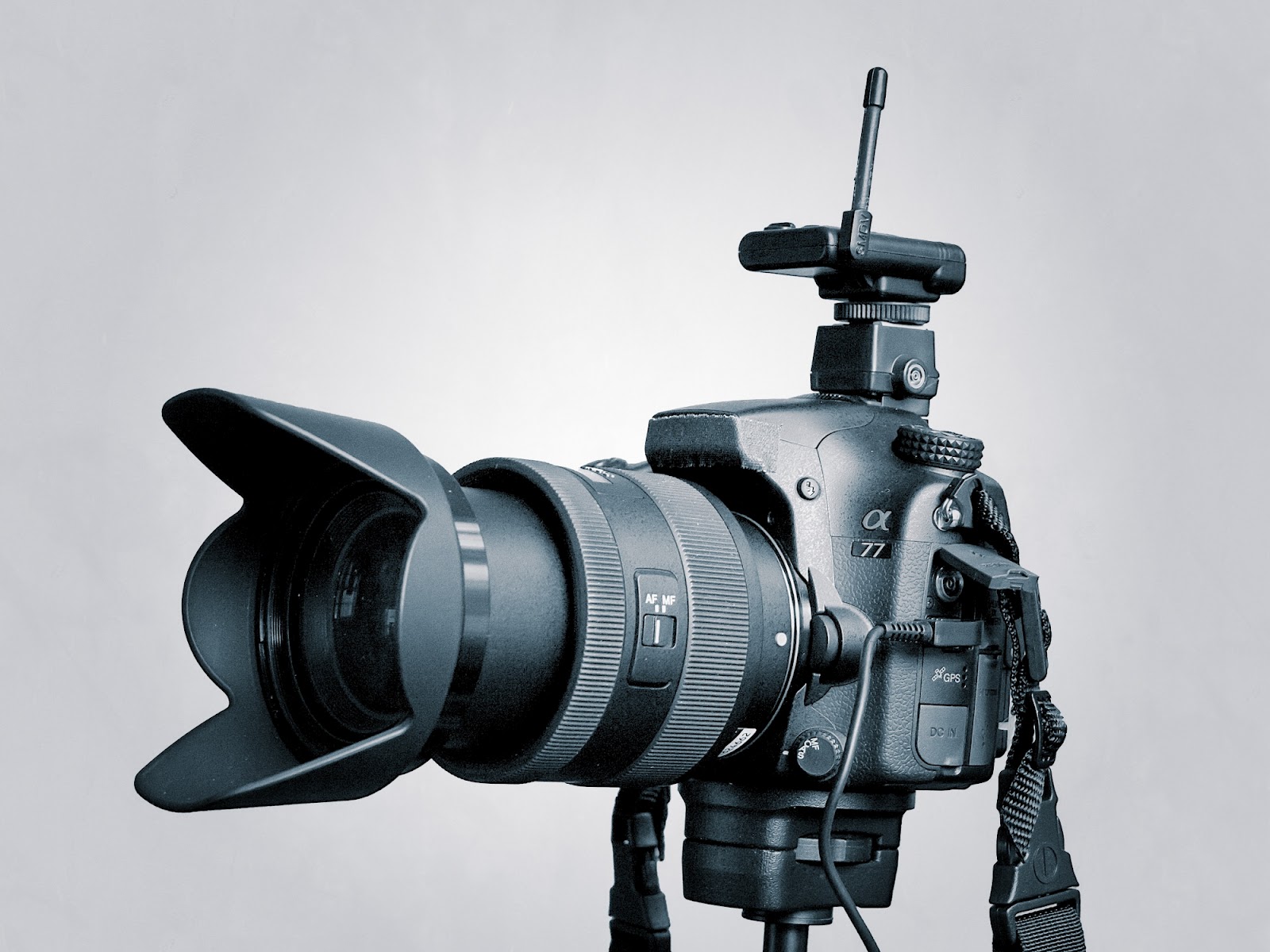
Sony a77. First report. No Technical Jibber-Jabber.

Sony a77. First report. No Technical Jibber-Jabber.:
Okay.  Let's get the "attack fodder" out of the way first so the lunatics in the forums don't start howling at the moon....  Sony doesn't know who the hell I am.  They've never talked to me, called me or offered me any sort of bribe, swag, quip pro quo or payment to either buy their cameras or write about them.  Just because I'm writing about a Sony a77 doesn't mean I'm tossing out my cameras from Canon, Panasonic or Olympus.  Just because I also enjoy shooting this camera doesn't mean my affection for the micro four thirds cameras is dead in the water.  Camera bought and paid by Kirk Tuck.  It's not the world's greatest camera.  It certainly is an interesting one.


You'll remember, if you read the VSL over time, that I'm a big proponent of the idea of EVF's.  I like them a lot.  And interestingly, the first EVF camera I owned (and still own) is the Sony R1.  While the finder is no technical wonder it was my first full time "live view" camera and I like it a lot.  I still pull it out and shoot with it from time to time.


The camera that convinced me that EVF would be, is, the wave of the future in camera design was the Olympus Pen EP2 with it's stellar little VF2 accessory finder.  I love being able to view, before I shoot, all the changes that the camera will apply to the final image.  Dial in a different color temperature, see the results.  Dial in exposure comp, see the results.  The implementation on the GH2 is a bit different.  The preview only works in the manual exposure setting.  But that's okay.


I first read about the Sony a77 24 megapixels (APS-C) camera when it was announced last Sept. which prompted me to write this:  Why the Sony a77 Changes Everything.  That entry pretty much sums up why I think what Sony is doing is so game changing.  When I had the opportunity to divest some older gear at a good price I decided I would put my money where my keyboard had been and buy one with the 16-50mm f2.8 lens.


Do I like it?  Yes.  Is it perfect? No.  Will it replace everything I own?  Not hardly.  This quick report is based on my first full week of ownership and I'll probably supplement it with more as I become more conversant with the camera.


Let's talk about handling first.  This is a big, heavy camera.  More so with the big, fast zoom on the front.  The zoom is sharp.  It's centrally very sharp when used wide open and hits max sharpness about one stop down for the center two thirds of the frame.  5.6 brings in the rest.  It has distortion at the wide end.  The camera corrects this in Jpeg.  But I've been shooting in raw.  The Sony raw software will also correct it automatically.  I haven't upgraded to Lightroom 4.0 yet but I'm sure there's going to be a profile in there as well.  I like shooting with this lens but I am a portrait guy so I wish it was a little bit longer.  Tough.  I'll get a longer lens to cover the rest of the focal lengths I shoot.


The camera is stout and fat and I don't know where all the buttons are yet.  It feels good in my hands but after walking around with an Olympus Pen it feels monstrously heavy.  The fast zoom doesn't help with the weight.  It's no more ponderous than my Canon 5Dmk2 with the 24-105 attached so I guess it just goes with the territory.


The menus are incredibly straight forward and I have mastered them to the extent that I need to.


The finder is remarkably cool.  If I'm not shooting with studio flash I have the camera set to no post shot review.  And I have it set to show me exactly what I'll get when I push the button.  After using it for a day and confirming that what I'm seeing in the EVF while I'm shooting is the same thing I would see if I reviewed I am happy.  It makes for a faster shooting experience since, for all intents and purposes, you are pre-chimping.  Love it.  PRE-CHIMPING.  And when you do it in the EVF you can disguise your lack of confidence in your mastery of technique.


Once I started using the EVF on the Sony I found it hard to go back to a regular OVF on the Canon 1D series or the 5d2.  The reason is that the 2.4 million dots of the Sony finder give me a very realistic image with so much information (the info can be turned off if you want  a clean screen to look at).  I can see exactly what I'm getting all the time.  It's amazing.  It's like science fiction.  And, the finder is better than my VF2's with which I'm already quite satisfied.


The battery life is not nearly as good as the pro Canons or Nikons.  I expect to get somewhere around 500 shots per charge with the way I usually shoot.  I'll need a total of three batteries to get me through a typical still photography shooting day.  If I'm shooting video I'll want six.  But shooting video all day with a Canon 5Dmk2 I want six as well.  No big changes in on the video side.


The camera and lens are advertised as being weather resistant.  Kai on Digital Rev sloshes water all over the combination in his video from last year.  I'm not so flippant since it was actually my $2000 that went to buy the camera but I did shoot a full afternoon in downpours last saturday at SXSW.  I tried to keep the camera covered but it eventually got soaked and it's still working fine.


I hate the weird hot shoe that Sony inherited from Minolta but I found some $10 adapters and they seem to work well for flash triggers and manual flashes.  The camera also has a PC socket for good, old school sync connections.


The camera focuses very quickly, shoots even quicker and has fast frame rates. There's a "trick" frame rate at 12fps but you give up control.  The "real" top frame rate is 8 fps and that's fast enough for rational people. So, the camera is tough, water resistant, has a kick ass EVF, shoots faster than Bruce Lee punched and cycles like a rocket (with caveats). That leaves only one real question for a preliminary overview:  HOW IS THE IMAGE QUALITY?


Well..........If you shoot in the studio and you use ISO 80, 100 and 200 you'll be in the dynamic range territory of the real medium fomat cameras.  In a word, those settings make this camera stunning.  Want to shoot portraits with total control of tonality?  Done.  Super sharp and super high resolution? Done and Done.  But what about all the people for whom 1600 is low ISO and 3200 is their general comfort zone?  I have a suggestion.  It may cause people to grind their teeth at Sony.  I suggest that, if low noise at high ISO is your over riding priority for a camera that you pass on this one.  You actually start seeing a bit of noise in the shadows as low as 800 and it just gets grainier.  Now, up to 3200 the graininess is monochromatic and looks like good, old fashion film grain.  And I personally am okay with that.  But if you are coming from a Nikon D3s or a Canon 1Dmk4 you'll be appalled.  It's just not quiet.  On the other hand, the files are huge and as you down res them the noise gets down rezzed as well.  (added: I've just discovered the MF noise reduction which stands for multiple frame noise reduction.  If the subject isn't moving the camera can be made to shoot multiple frames and process them into one, throwing out all of the noise anomalies. Very cool and very effective for night scenes, etc.)


What will I do?  For now I'll use the a77 in bright light, in the studio and under controlled conditions and I'll impress the hell out of all the people who want to see flawless, super high res files.  I'll give it a try for theater photography because I love the way the camera operates. But the files will need some work in the ole noise reduction software.


Is the camera a noble effort wrapped in a "big FAIL?"  Not at all.  It may be the best camera on the market for low ISO work and for fast work.  And even though the high ISO crowd tends to yell and scream and drown everyone else out there are lots of people who get the advantages of lighting and careful technique in the pursuit of beautiful and different image quality.  I think I'll keep it.


More to come after some studio sessions.


Here's the link to the shots I did on Saturday at SXSW: http://visualsciencelab.blogspot.com/2012/03/one-of-our-favorite-barristas-at-caffe.html
©2010 Kirk Tuck. Please do not re-post without attribution. Please use the Amazon Links on the site to help me finance this site.


Source : Google Reader

A quick review of a lens for Micro Four Thirds. The Panasonic 14-45mm.

A quick review of a lens for Micro Four Thirds. The Panasonic 14-45mm.:


I get maximum image quality bang for my bucks when I use single focal length lenses on my Panasonic and Olympus cameras but there are times when you're walking through a crowd and you want to shoot instantly.  But you have the wrong lens on the camera and by the time you get into your bag and get the lens changed out the image you were lusting after is long gone.  In those situations it makes sense to use a zoom lens.  Panasonic and Olympus make a bunch of "normal" zoom lenses.  Most of the cameras come with one in the "kit." 


I've got a collection of them.  Lately, when I get them in kits, I try to trade them for pricey, name brand camera batteries.  But I also wanted a good one so I did my research on the various web sites that do lens test (Photozone, SLRgear) and decided to try the grandfather of m4:3 zooms, the Panasonic you see above.  It's small and light but a little bigger than the current Panasonic 14-42.  The newer lens doesn't have the Optical Image Stabilization switch on the body.  The older one does (see above).


I decided I needed a better lens when I tested the 14-42 that came with my G3.  It was consistently soft at the long end and got worse as I focused to infinity.  What did I have to lose?  I waited until one of those days when Amazon.com's dynamic pricing algorithm was in my favor and bought one for around $225.  Long story compressed to digestible tidbit?  It's good.  The center is really nice and sharp and stays that way from wide to tele.  It's sharp wide open (in the center 2/3rds of the frame) and that's where I like to use it.  I spent an afternoon shooting with it on the GH2 body and it's a revelation how much fun it is to shoot with a small and light camera and lens package.  


Keeper.


©2010 Kirk Tuck. Please do not re-post without attribution. Please use the Amazon Links on the site to help me finance this site.


Source : Google Reader

Transitioning to an EVF future. And then some.

Transitioning to an EVF future. And then some.:


I've been using and writing about electronic viewfinders for the last three years here on the Visual Science Lab.  My first real experience with EVFs was via the Sony R1 camera which, I felt, was a surprisingly prescient offering for its time.  It use a very flexible LCD finder screen which could be positioned as a wais tlevel finder and it had a low res but well implemented, true EVF.  When packaged with a large sensor (about the size of the Canon G1X sensor) of 10 megapixels and a very well reviewed Carl Zeiss 24-120mm (equivalent) zoom lens it became a great shooting camera for a certain kind of subject.  I used it extensively for interior and exterior architectural studies and many available light portraits.  It worked well in the studio for still life set ups with the proviso that I shoot with continuous light.  The low light capabilities of the finders weren't stellar and made use with flash a bit problematic.  But the sensor, which was rumored to be a variant of the sensor in the Nikon D2x professional camera, was amazingly detailed and well mannered.


Ben and I have also had the pleasure of using the EVFs in Canon's superzoom line of compact cameras, including the SX10, SX20 and SX30.  The EVF worked well in full sunlight for stills and video.  Ben and his friends have put a lot of miles on those cameras in the pursuit of their digital video art.  (Which reminds me...he promised to teach me Final Cut ProX when he had a chance..).


Recently much progress has been made with EVFs.  So much so that I found, recently, that I've been drawn to work with the Panasonic GH2 and the Olympus EP3 not so much for the nimble size and fun optics but for the instantaneous feedback of the well implemented EVFs.  Pre-chimping beats the hell out of post chimping any day of the week.


I love pulling the camera (regardless of brand) up to my eye and seeing a clear, clean representation of just how the camera would finally render the images.  The impact of exposure compensation, Jpeg parameter changes, dynamic range expansion schemes and more.  When I went back to a conventional optical viewfinder I always found myself wanting to see what the camera saw, not just the soft fall of focus caused from viewing a scene through a fast, wide open lens.  The scene might look one way with the lens wide open but have a different character when stopped down for shooting and with all the parameters figured in.  Seems like a little thing to wait to see the image on the back panel after taking the test shot but it isn't.  I also work a lot of days in the direct sun and resent having to wear a Hoodman Loupe around my neck for post shot examining of a camera's LCD screen in bright light.  Or any ambient light.  Every color cast changes your perception of color rendering...


So, when Sony announced the a77 back in August my attention was piqued.  But real life intervened.  The floods in Thailand threw a huge wrench in Sony's rollout and I finally put my hands on an a77 a few weeks ago and started an evaluation.  My first concern was the quality of the viewfinder but that faded in minutes.  The finder is great.  I love it.  But we'll talk about EVFs in depth in a future column.  My second concern was how the camera would handle situations that comprise the bulk of my paid work, portraits with electronic flash on various locations.


The a77 accepted my radio triggers and syncs up to 1/250th of a second with smaller flashes.  With bigger flashes is seems to sync better at 1/125th.  With one menu adjustment the finder shows a bright image of the person in front of me under conventional modeling lamps of 100 watts.  As the light drops (say in a dark room) the finder becomes noisier but is still usable for easy composition and feedback.  Shooting this way means that I do have to  post chimp to see the actual result.  But as I transition to shooting more portraits with big panels I can go back to the nuanced preview I like.


My first paying job with the a77 was making location portraits of doctors and the camera passed the test with good marks. 


When I went back to shoot with my conventional cameras I found that, of all the cameras I owned, they had become the least fun to shoot with.  And, at the ISOs I use (50-1600) the files where a toss up.  I made up my mind and decided that, for my "work" cameras, I would switch to an all Sony system.


I won't bore you with the details of the disposition of the previous system but I thought I'd share what I've started with in the new system.


I had amassed a collection of bodies over time.  Each had different menu set ups and the screens on the back of the cameras ranged from "good"on the back of the 5d2 to "horrible and punishing" on the 1Dmk2 (my oldest).  I had a bunch of disparate lenses and both of my most used "L" lenses were very sharp f4 lenses.  I really wanted to simplify the entire inventory. 


I wanted two identical bodies so the menus, knobs and settings would always match.  And I've signed a pact with the gods of photography to only replace in pairs from now on.  With this in mind I bought two a77's.  I read both manuals (kidding) and I set up both cameras to exactly the same settings.  Now I'm diving in and master each of the control sets and special settings.  I'm intrigued by things like the Multi-Frame noise reduction.  I want to know every control setting on the camera.
No fumbling with personal settings or custom settings that vary from body to body.


I wanted two fast zoom lenses that I could use to cover an event without having to change lenses.  I working in a lot of dust and grime last year and not having to switch lenses on a hot, dusty highway construction site would be...advantageous.  I chose the Sony 16-50mm f2.8 lens and the 70-200mm G series lens.  I've tested them at all relevant apertures and I'm happy with their performance.  


I bought the Sony HVL-F58AM flash unit and it seems to work fine.  It's flexible and it can be controlled by the in-cameras flashes on the a77's. 


I also bought a nice Hasselblad to Sony Alpha lens adapter and I'm very, very happy with the performance of the 80mm Zeiss Planar and the 120mm Zeiss Makro-Planar.  They have a different look.  I call it "authoritative bright."  It looks clinical, contrasty and clean.


In the end, all current systems are overkill for most of the photograph we do.  I do like shooting with the EVFs and I'm sure many will argue convincingly for OVFs.  I looked at aging inventory in one system and decided to start over again in an different system.  Working with new gear and a new style of feedback is refreshing and novel.  It makes shooting more fun.


I'm sure I'll hit some snags in the transition but you know I'm transparent enough to mention both sides of the equation.  I wonder if Sony marketing needs a pro user to sponsor?  


©2010 Kirk Tuck. Please do not re-post without attribution. Please use the Amazon Links on the site to help me finance this site.


Source : Google Reader